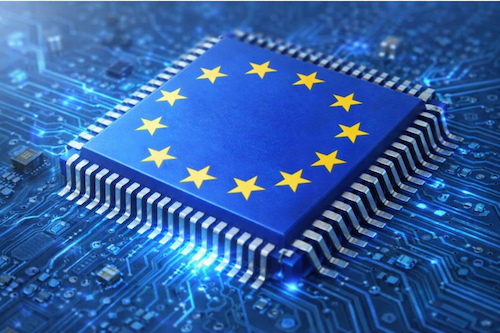

Digital sovereignty is no longer a defensive response to dependency, but a strategic awakening embraced by European states and major organisations.
After several decades in which digital infrastructure became concentrated in the hands of suppliers outside Europe, a reverse movement has begun. It results from the collision between European legislation and the extraterritorial reach of US regulations.
Successive geopolitical crises, from the pandemic to persistent international tensions, have since exposed the fragility of digital dependencies. They have shown how difficult it is to maintain critical services that rely on infrastructure beyond European control.
As a result, public authorities and major buyers are ceasing to regard technological dependency as inevitable and are beginning to treat it as a quantifiable economic, legal and operational risk.
This change in attitude is more a pragmatic realignment than an ideological break. It was triggered by a combination of tensions and industrial vulnerabilities that are now well documented.
This awakening is first visible in the figures. According to Cigref, around 80% of European spending on software and professional cloud services still benefits American companies, amounting to more than €260 billion a year. Once justified by efficiency and speed of deployment, this situation is now seen as a loss of strategic control, particularly in sectors subject to extraterritorial regulations. The issue has moved beyond data location to actual control over digital value chains, software updates, contractual clauses and long-term technological dependencies.
This shift in perspective is leading to concrete decisions. In France, the state has introduced a strategy to streamline its digital tools around recognised solutions hosted under European jurisdiction. The gradual replacement of non-sovereign videoconferencing and collaboration solutions with alternatives running on sovereign infrastructure demonstrates its determination to regain control over critical uses. According to the Interministerial Digital Directorate, several tens of thousands of public servants already use these platforms within a secure framework, with the aim of extending them across central government.
The awakening is also institutional. In January 2026, the French government officially created a digital sovereignty observatory to assess objectively the technological dependencies of government bodies, local authorities and strategic businesses. This initiative goes beyond symbolism. It aims to create usable measurements to guide procurement policies, prioritise investment and identify key technologies to relocate or secure. This measurement-based approach breaks with general sovereignty rhetoric that long remained disconnected from operational realities.
A similar movement is under way across Europe. The European Commission has gradually developed a coherent framework combining regulation, standardisation and funding. The GDPR, Digital Services Act and Digital Markets Act seek not only to regulate dominant platforms but to restore market balance and encourage the emergence of competitive European alternatives. The Cloud Sovereignty Framework also establishes functional criteria for assessing the legal, technical and operational compliance of cloud services. This will enable public and private buyers to make informed decisions.
Finally, this awakening is taking shape through strategic investment. The Digital Europe programme will allocate more than €1 billion between 2025 and 2027 to strengthen artificial intelligence, cybersecurity and trustworthy digital infrastructure. These funds no longer aim simply to encourage innovation, but to build lasting industrial capabilities that are compatible and usable at European scale. The objective is to minimise critical dependencies while maintaining the competitiveness and efficiency of IT systems.
For IT departments and business decision-makers, this renewed focus on sovereignty changes the nature of their trade-offs. It is no longer about setting ideology against efficiency, but about reintegrating legal compliance, reversibility and operational resilience into technology selection criteria. Sovereignty then ceases to be a mere rallying cry and becomes a quantifiable, manageable variable embedded in long-term digital plans.
Article author
Call for contributions
Are you an expert, journalist or advocate for digital sovereignty? Contact us to contribute to our publications!
Salon Souveraineté Numérique
29 & 30 JUNE 2027
Paris Expo Porte de Versailles – Hall 5
REGISTER